


What is Meshtastic
Meshtastic is an open-source decentralized communication system that allows users to exchange messages through small radio devices using LoRa technology.
Meshtastic networks do not require cellular networks or the Internet to operate.
The radio modules communicate directly with each other, forming a mesh network. If two devices cannot communicate directly, a message can be relayed through intermediate nodes. Each device acts as both a receiver and a transmitter.
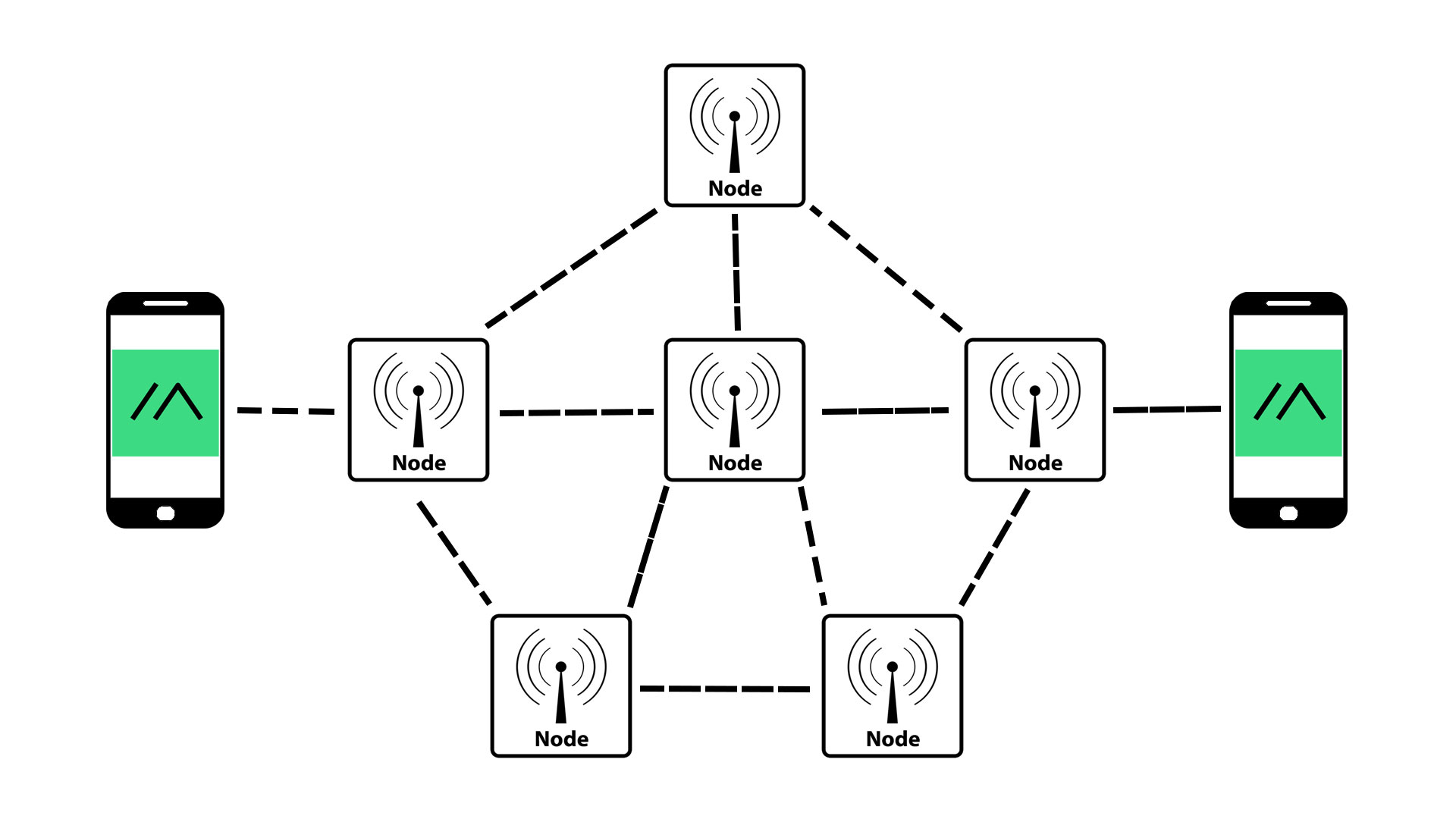
Does it require the Internet?
No. This is one of the main features of Meshtastic. Two or more radio devices are enough to exchange messages.
The Internet can be used as an additional option, for example, to connect to MQTT or other network services, but the mesh network itself does not require it.
The Meshtastic project is designed as a communication system that does not depend on cellular towers or the Internet. The project’s website is meshtastic.org.
What frequencies does Meshtastic use?
Meshtastic uses LoRa radio communication, but the specific operating frequency depends on the region. This is primarily due to regulations: different countries and regions allocate different radio frequency ranges for such purposes.
The frequency ranges used by Meshtastic include:
- 433 MHz — used in some regions of Asia and Europe;
- 868 MHz — mainly used in Europe and some other regions;
- 915 MHz — mainly used in North and South America, as well as some other countries.
This does not mean that an entire region uses only one frequency. Individual regions may have additional frequency ranges and restrictions. Meshtastic itself provides separate regional settings that define the permitted frequency range, transmitter power, and other operating parameters of the radio module.
What to consider when buying a device
If you decide to purchase a Meshtastic device, you should definitely pay attention to its frequency range.
For example, you may find models available in the following variants:
433 MHz / 868 MHz / 915 MHz
Although these devices may look identical, the radio module installed in them is designed for a specific frequency range. Therefore, before purchasing a device, you need to determine which frequency range is used in your region.
For myself, I chose LILYGO T-Echo devices with a 433 MHz frequency.
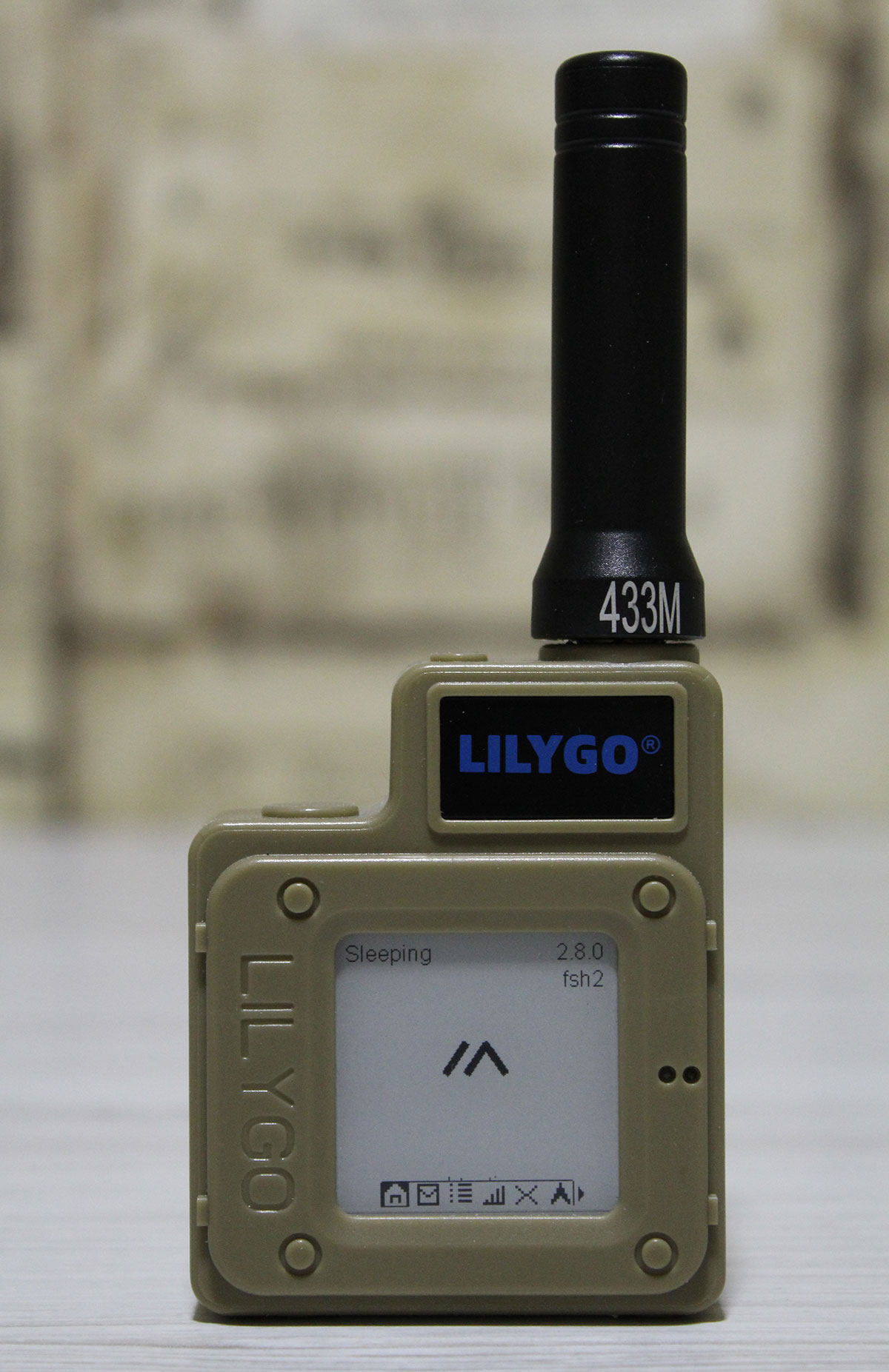
In Ukraine, 433 MHz is more commonly used, although 868 MHz is also used.
Therefore, when choosing a Meshtastic device, you should consider more than just its size, battery, GPS, or display. The frequency range is one of the main parameters you should check before buying.
Meshtastic devices come in many different forms. Some have a display, while others do not. These devices are somewhat like radio pagers. There are ready-to-use devices, such as the LILYGO T-Echo, as well as individual components that you need to assemble yourself, such as Heltec boards. This opens up many possibilities for experimenting with radio technology.
Each device is called a node.
You will most likely need to install the firmware on the device yourself. If you want, you can even make changes to the source code.
Meshtastic devices can be used completely autonomously. However, their full functionality is revealed when they are used together with a smartphone. You can install an application on your phone that includes a messenger for communicating with other users. It also provides maps and various settings. The device connects to the phone via Bluetooth.
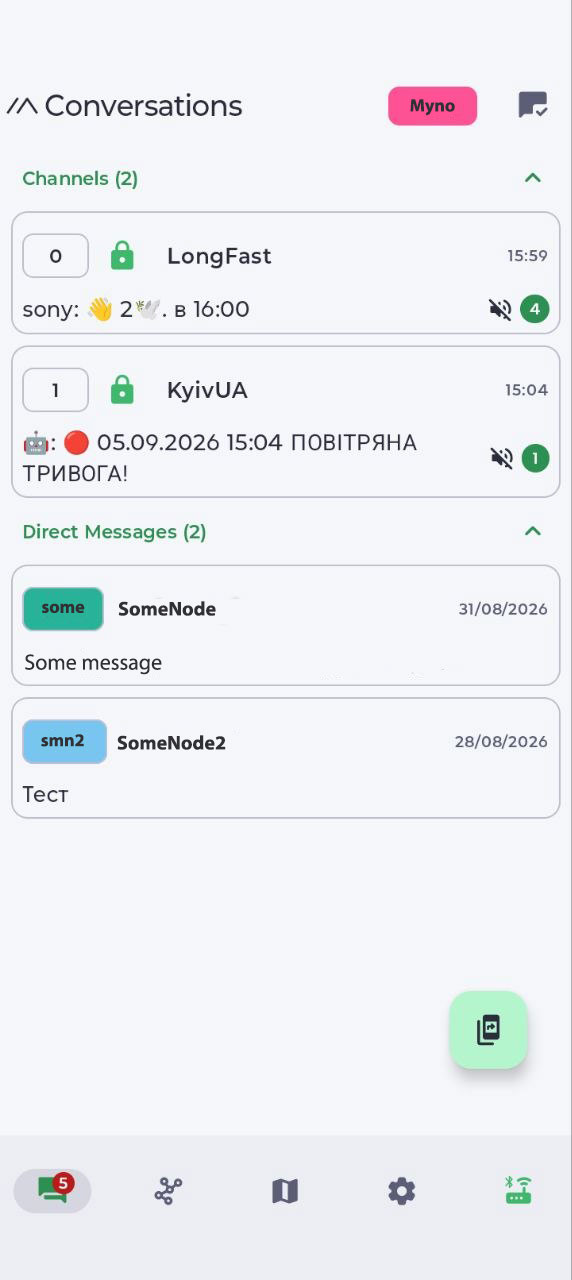
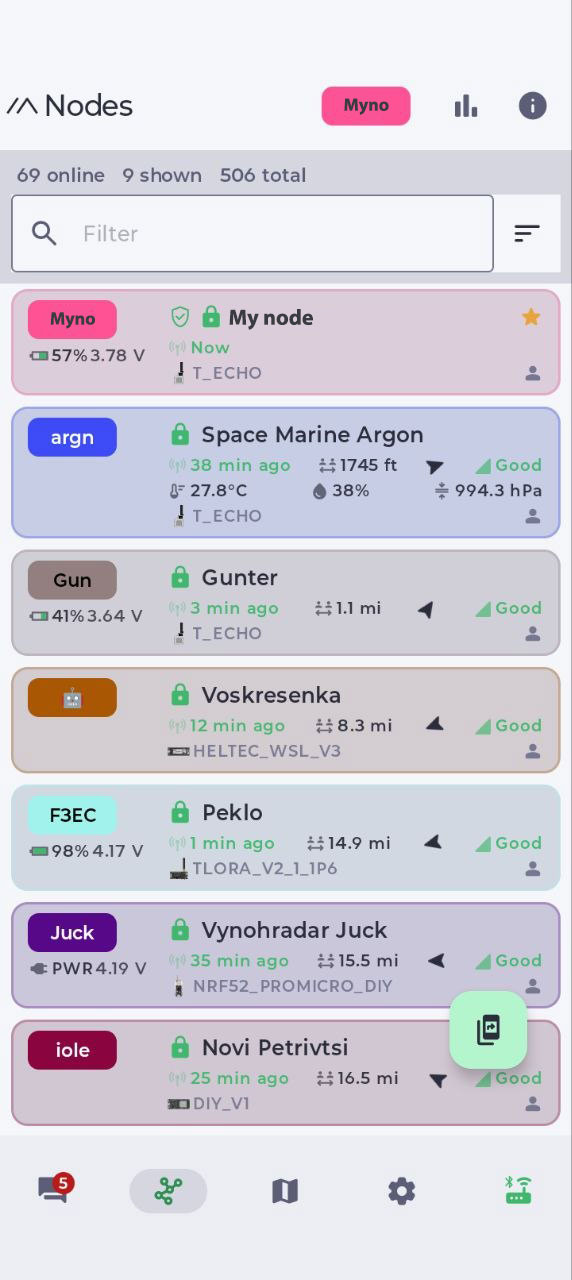
In addition to a phone, the device can also be connected to a computer. However, this makes more sense if you plan to use the device as a stationary node.
Messages can contain up to 200 characters. Emojis and message reactions are supported. Messages can be private, sent from one user to another. Messages are transmitted in encrypted form. Messages can also be shared in group chats.
Conclusion
Meshtastic devices make it possible to build a completely decentralized network for exchanging text messages. This can be useful for hiking and travel groups, or simply for people interested in radio technology and programming.
It can also serve as an alternative means of communication.

Similar posts:
-
Medium Wave Radio (MW / MF)
Medium wave (MW) is a radio band that is intermediate between long and short waves. Different designations are used in different languages and contexts. MW (Medium...
-
Longwave Radio (LW / LF)
Longwave (LW) is a radio frequency band characterized by very low frequencies and extremely long wavelengths. Depending on the language and technical context, you may enc...
Leave a Reply